
What should you say in a thank-you message to a teacher?
Name something the teacher did, describe a memory or change you noticed, and thank them directly. These 8 formats help you choose between a song, letter, video, poem, practical-impact note, memory story, group tribute, and gift note. Pick the format that suits the teacher and the setting.
1. The Personalized Song Thank You Message
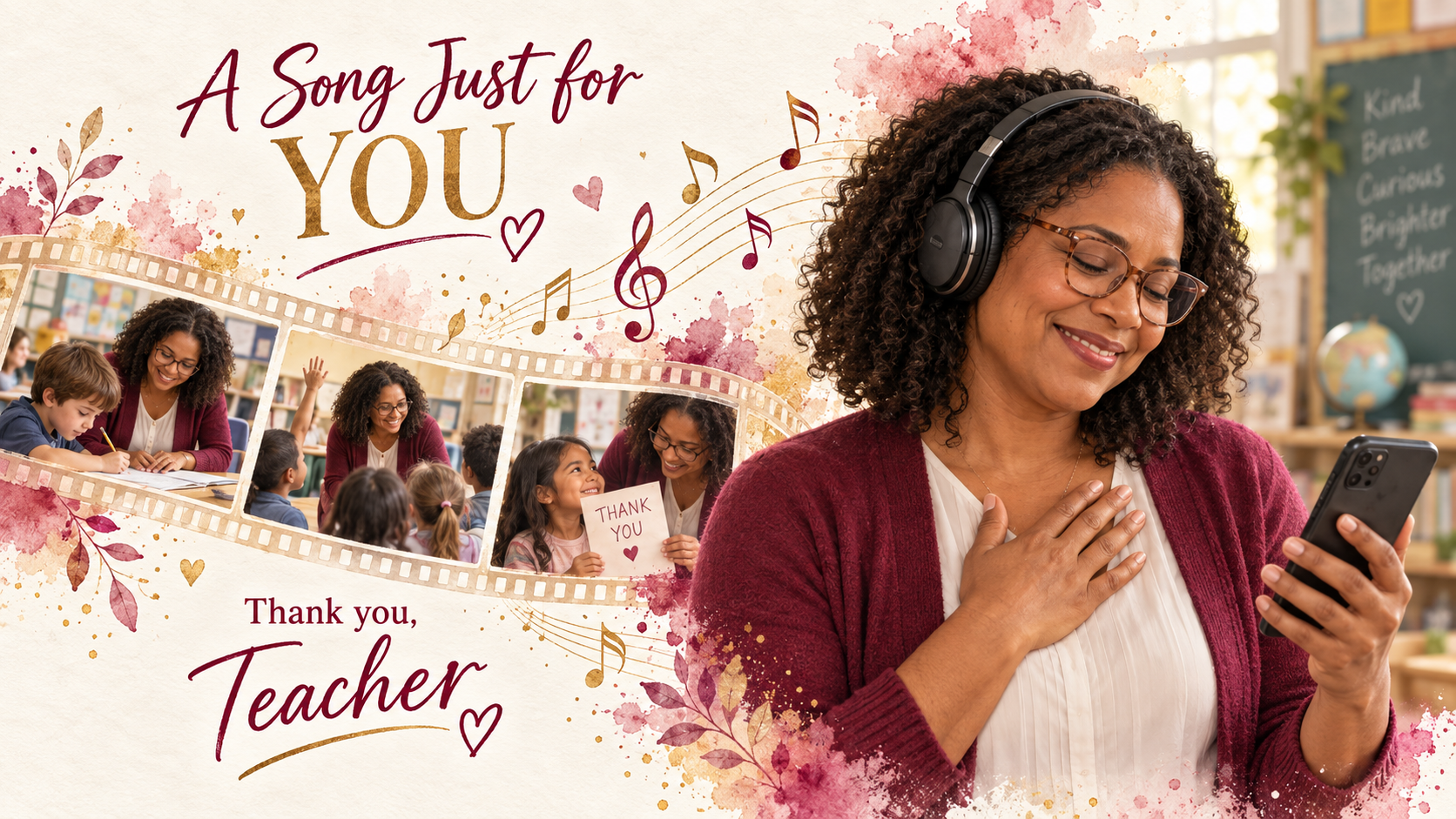
Use a song when you want classroom memories and gratitude in a musical keepsake. Collect details from students or families, then review names and lyric wording before generation. The original examples below describe particular classroom experiences; replace them with your own.
A strong version might come from a whole class. Parents gather short lines from students, such as “Thank you for helping me stop being scared to read out loud” or “I'll always remember your Friday science demos.” Those details turn the song from sweet into unforgettable.
Examples and writing notes:
Practical rule: Don't lead with praise. Lead with one memory the teacher will remember.
- For a retiring teacher: Choose a reflective tone and include memories from different years or students.
- For an end-of-year class gift: Gather short student comments and build the message around shared classroom moments.
- For a milestone celebration: Use it when a teacher has led a department, mentored students for years, or supported a graduating class.
2. The Heartfelt Letter Style Thank You Message
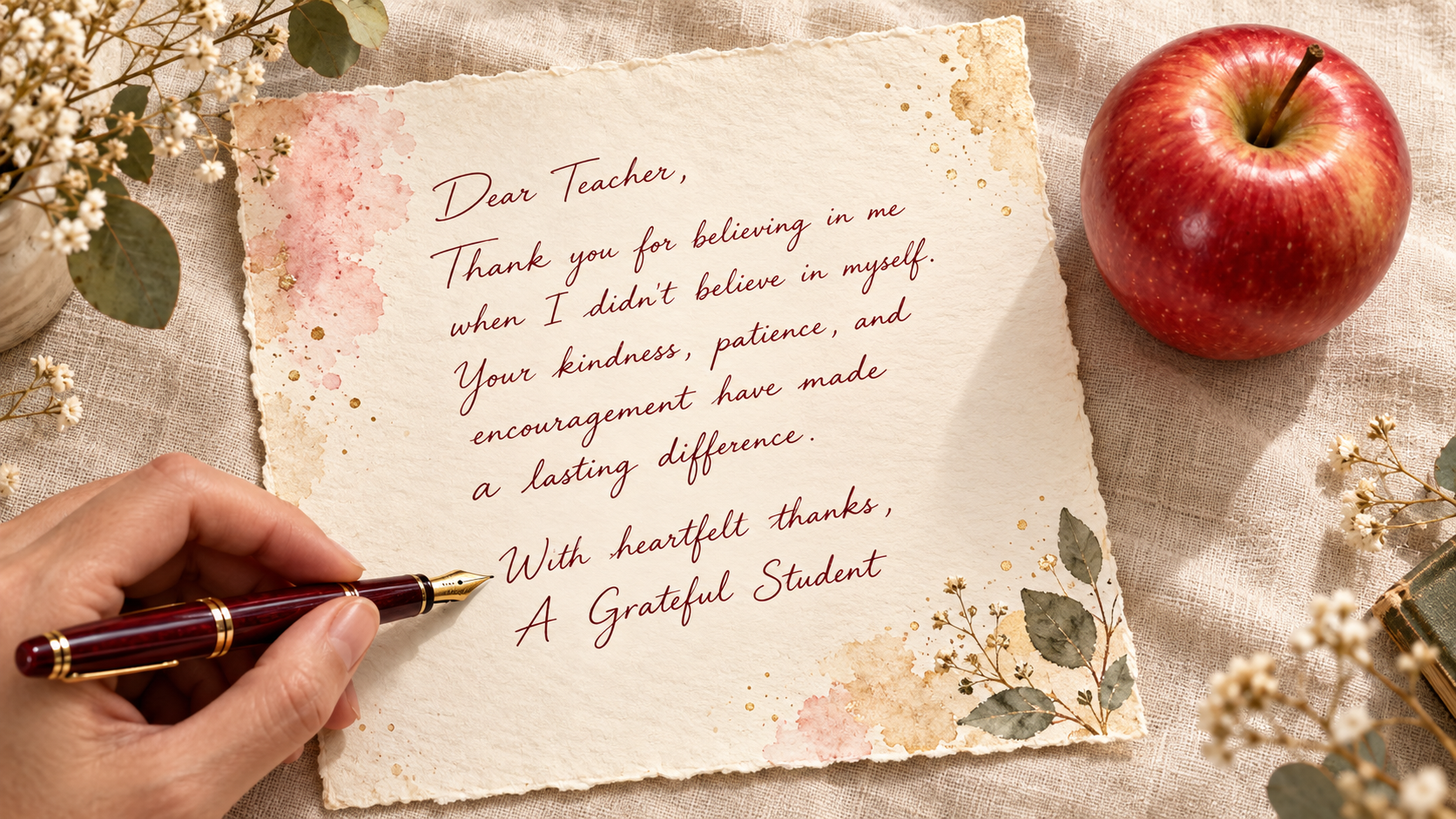
A letter gives you space for a memory and a direct thank-you. Name what the teacher did, explain what changed, and close in your own voice. The one-page suggestion below is editing advice, not a required length or a finding about how teachers read.
Examples and writing notes:
Keep it to one page if you can. Long enough to feel thoughtful, short enough that the teacher will read every word in one sitting.
- Start with your thanks: Name the teacher and say what you're grateful for.
- Name real growth: Mention improved confidence, reading progress, classroom engagement, or emotional support.
- Close with lasting impact: Tell them what you think your child or student will carry forward.
3. The Video Testimonial Thank You Message
A video tribute lets contributors speak for themselves. Use the prompt questions below, ask for permission to share recordings, and have one organizer collect and review them. Introduce the teacher clearly so the tribute still makes sense when viewed later.
- For students: “What's one thing your teacher helped you do this year?”
- For parents: “What change did you notice in your child?”
- For colleagues: “What kind of presence has this teacher been?”
4. The Poetic or Creative Writing Thank You Message
Choose a poem or creative note for a teacher who encouraged writing, music, theater, or art. Use a classroom image and a specific change as your starting point. Plain language is enough; the piece should sound like the student or family giving it.
Examples and writing notes:
Some of the most visible teacher-thank-you examples online are polished but generic. The more meaningful ones name patience, care, and specific growth instead of repeating “you made learning fun.”
- Open with an image: a classroom door, a stack of marked papers, a morning greeting.
- Name the change: more confidence, less fear, more curiosity, more voice.
- End with gratitude: say what will stay with you after the year ends.
5. The Practical Impact Thank You Message
An impact note connects your thanks to something you observed. Describe the starting point and the change without inventing a result or speaking for other families. The reading-confidence example below is a writing example, not a report about a real student.
Write something like this instead: “When the year started, Maya avoided reading aloud. By spring, she was volunteering to go first. Your patience and the way you never rushed her made that change possible.”
Examples and writing notes:
If you can point to one before-and-after change, your message will feel generous instead of vague.
- For a parent: Name one emotional or academic shift you saw at home.
- For a student: Point to a skill you now have because the teacher kept pushing and supporting you.
- For a principal or school leader: Share the message as part of a broader recognition note when the teacher's impact reached beyond one child.
6. The Memory Lane Thank You Message
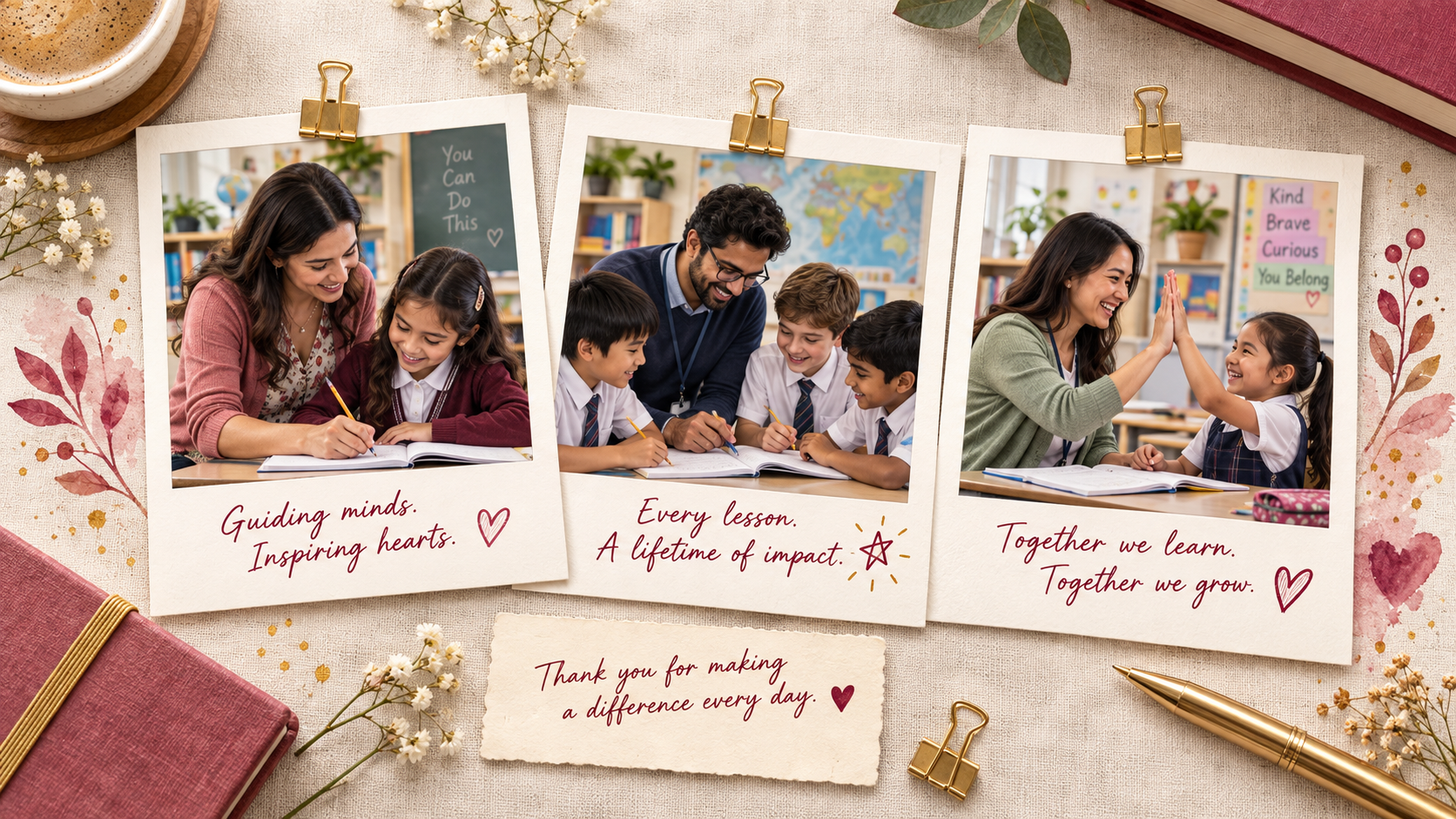
A memory note can tell a short classroom story. Choose a moment the teacher will recognize, explain why it stayed with you, and finish with thanks. Check that any photo or anecdote is appropriate to share; a private card can include details that do not belong in a public tribute.
7. The Multi Contributor Group Thank You Message
For a group thank-you, one organizer can collect names, check spelling, and arrange contributions by theme. Preserve each person's voice and ask permission before publishing. A booklet, card, or recording can work; choose what the teacher can comfortably receive and revisit.
- Group by theme: patience, encouragement, humor, classroom energy, or life lessons.
- Mix voices: include short student lines, parent reflections, and colleague notes if appropriate.
- Choose one presentation style: booklet, video montage, framed print, or digital page.
8. The Gift Paired Thank You Message
A gift note should explain why you chose the item. Follow the two-paragraph suggestion below if it helps: a specific thank-you, then the connection to the gift. Check school rules on gifts, and use a note alone when that is the appropriate option.
Write two short paragraphs. In the first, thank the teacher for something specific. In the second, connect that appreciation to the gift. If you chose a calm acoustic song, say it reminded you of the steady feeling they brought to the classroom. If you chose a plant, say it made you think of the way they helped students grow.
Examples and writing notes:
A small gift with a thoughtful explanation often feels more personal than a bigger gift with no message attached.
Which formats include a preparation checklist?
The counts below refer to checklist items in each section of this guide. They describe the written preparation help, not required steps, generated outputs, or a measure of gift quality. Formats without a separate checklist use the guidance in their paragraphs.
| Gift format | Checklist items in this guide |
|---|---|
| 1. The Personalized Song Thank You Message | 3 |
| 2. The Heartfelt Letter Style Thank You Message | 3 |
| 3. The Video Testimonial Thank You Message | 3 |
| 4. The Poetic or Creative Writing Thank You Message | 3 |
| 5. The Practical Impact Thank You Message | 3 |
| 6. The Memory Lane Thank You Message | Paragraph guidance |
| 7. The Multi Contributor Group Thank You Message | 3 |
| 8. The Gift Paired Thank You Message | Paragraph guidance |
What does a real teacher-appreciation campaign show?
On November 25, 2025, the Minnesota Department of Education reported nearly 3,600 handwritten messages of appreciation collected at the Minnesota State Fair, with cards being delivered to more than 1,200 schools. These figures describe that campaign. They are not a comparison of video, letter, or song effectiveness.
How do you turn these ideas into a GiftSongs recording?
Start with the style, recipient, occasion, and details you want in the song, then review the lyrics. The first free short song targets about 10 seconds; the actual recording length may vary. Your full lyrics remain available. To make a complete recording, create a separate full song using the allowance available to your account before purchasing it. Buying the short recording does not extend it.
Sources and related reading
The linked material includes publisher guides, message collections, and research where identified by the source. Creative examples and editorial advice do not establish that an AI song or a particular message has a proven effect.